
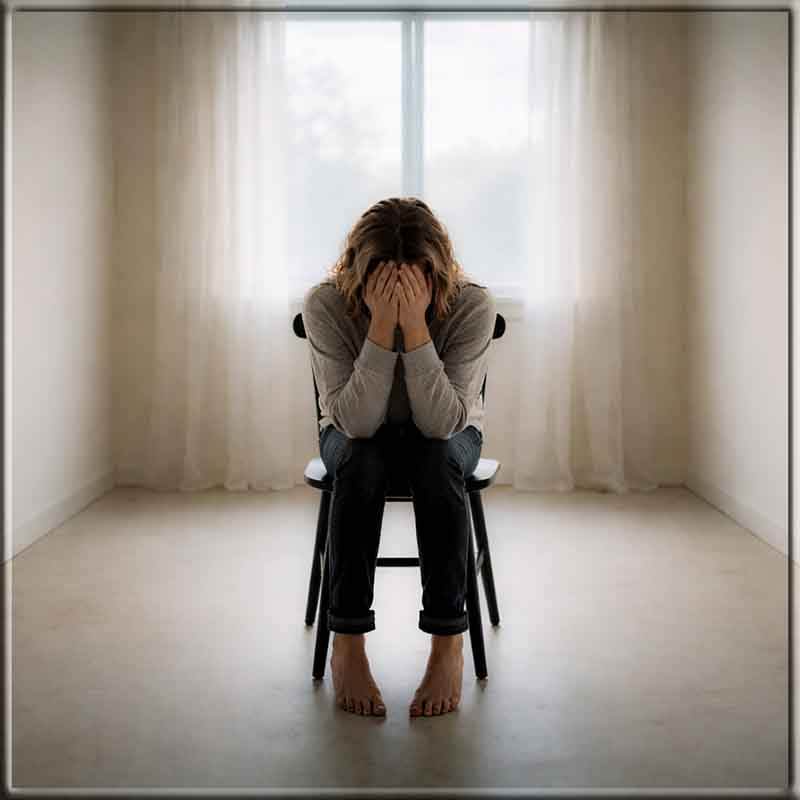
There is a line from the film World War Z: “Movement is life.” It is a survival instruction aimed at keeping people from stopping in the middle of a crisis. I think about it differently. I use it to describe what sustained manipulation does to a person’s ability to act.
Manipulation doesn’t just hurt people. It stops them.
Not all at once. The stop is gradual. One day you notice the plan you’ve been talking about for eight months hasn’t moved. You notice you’re asking other people’s opinions on things you used to decide without hesitation. You notice your world got smaller without anyone telling you to make it smaller.
That’s the freeze. And it doesn’t look like what most people expect it to look like.
What Getting Stopped Looks Like
The freeze from manipulation doesn’t look like someone sitting in a corner unable to function. It looks like someone who functions fine in most areas of their life while one or two specific areas go completely still.
Plans don’t execute. The reasoning is sound. The intention is clear. Nothing happens. The plan gets described in conversation for months. Then years. The same plan. In the same place it was.
Decisions take longer than they should. Not big decisions. Small ones. Where to eat. How to word a message. Whether to bring something up. These start requiring more processing than they warrant.
Confidence in your own read disappears. You used to trust your judgment. You acted on it. Now you verify it first. You run it by someone. You wait for external confirmation before committing to a direction you already know is right.
Explanation replaces action. You spend a lot of time and energy understanding the situation. Analyzing it. Describing it to others. Very little of that energy goes toward changing it. The analysis feels necessary because somewhere in the background, you’re still running the same question: do I have this right?
Where the Freeze Comes From
When someone tells you repeatedly that your read on situations is wrong, your memory is unreliable, or your responses are out of proportion, you start running an internal check before acting. The check is automatic. It asks: is this accurate? Am I about to be wrong again?
That check doesn’t turn off when the situation changes. Research on the functional freeze state shows the nervous system can stay in a reduced-action mode long after the original threat is gone. The brain routes away from the areas responsible for decision-making and initiating action. Not because it’s broken. Because it learned that acting on your own judgment in that environment kept producing punishment.
The freeze is an adaptation. It made sense under the conditions that produced it. It stops making sense once those conditions are gone.
Two years of documenting my own behavior taught me this before I had language for it. If you want the clinical framework behind what I observed, TraumaContent.com covers the behavioral patterns in more detail.
The Question Worth Asking
“Why am I stuck?” is not the useful question. It continues the same internal check that produced the freeze in the first place. You’re asking yourself to diagnose a problem using the same system the problem affected.
The more useful question is observational. What did you used to do that you no longer do? Where did your behavior change? What plans have been sitting in the same place for more than six months?
Look at the data. Not the feelings about the data. The actual behavior record. What stopped. When it stopped. What was happening at that time.
The pattern will be there. It always is. Seeing it clearly is the first real movement you make.
If you recognize this pattern in yourself, the behavioral pattern resources here have practical documentation tools. The behavioral patterns behind this freeze are documented in clinical detail at TraumaContent.com.