
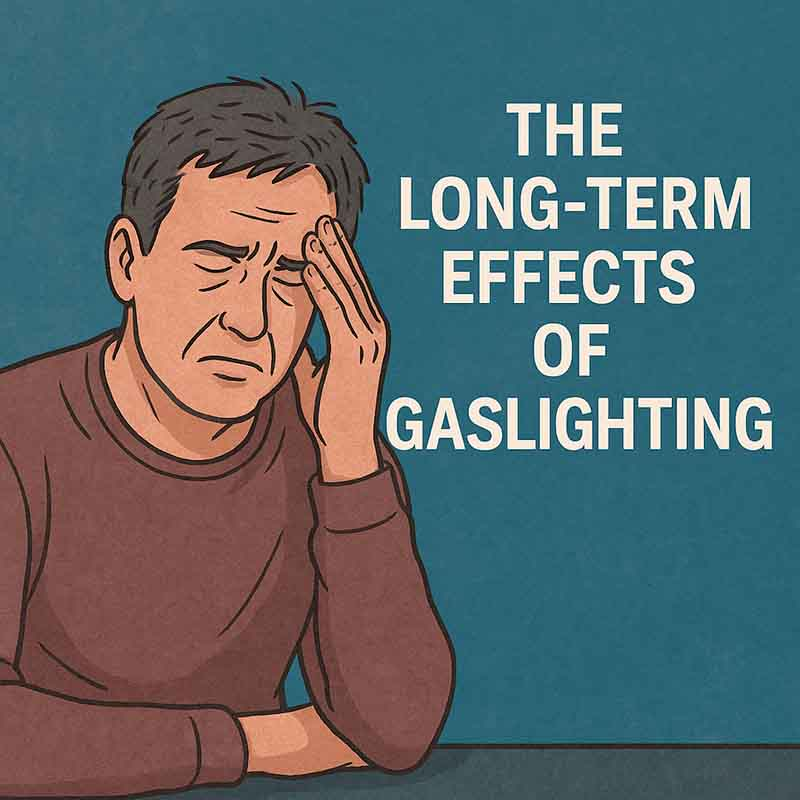
What are long term effects of gaslighting?
The long-term effects of gaslighting include chronic self-doubt,
difficulty trusting your own memory, anxiety, sleep disruption,
social withdrawal, and loss of identity. These effects persist
long after the gaslighting ends because the nervous system stays
in a defensive state even when the threat is gone.
Gaslighting doesn’t end when the moment passes. The manipulation lingers. It changes how you think, trust, and see yourself. Over time, it leaves emotional and physical marks that take effort to undo.
This post explains how gaslighting reshapes the mind and body over time, what the effects look like, and how recovery begins.
The Slow Redefinition of Self
Gaslighting replaces your truth with someone else’s version. Over time, you start doubting your memory, your emotions, and your instincts.
- You second-guess even small choices.
- You apologize when you haven’t done anything wrong.
- You look to others to confirm what’s real.
This doesn’t happen suddenly. It builds quietly through repeated manipulation.
Emotional and Physical Stress
The body reacts to gaslighting like ongoing danger.
- The nervous system stays on high alert.
- Sleep becomes light and restless.
- Focus and motivation fade.
- Headaches, fatigue, and anxiety increase.
Even after the gaslighting ends, your body keeps reacting as if it’s still under threat.
Isolation and Mistrust
Gaslighting separates you from others by making you unsure of your judgment.
- You withdraw to avoid conflict.
- You fear speaking up.
- You stop reaching out because every conversation feels unsafe.
Isolation becomes a false sense of protection, keeping the cycle alive long after the source is gone.
Identity Confusion
Long-term gaslighting blurs your identity.
- You lose touch with what you enjoy.
- Decision-making feels like risk-taking.
- You replay moments to confirm what was said or meant.
It takes time to rebuild a sense of self once it’s been repeatedly questioned.
Recovery and Repair
Healing begins when you stop seeking validation from the people who distorted your truth.
- Write down facts to stay grounded.
- Limit contact with those who cause confusion.
- Surround yourself with people who listen and respect boundaries.
- Use therapy, journaling, or mindfulness to restore self-trust.
Recovery is not about convincing others; it’s about believing yourself again.
Conclusion
Gaslighting changes how you see and feel reality. But awareness brings repair. With time, clarity replaces confusion. Your body and mind learn safety again. Healing starts when you choose peace over proving a point, and truth over approval.